DDAC 40% (Didecyldimethylammonium Chloride)
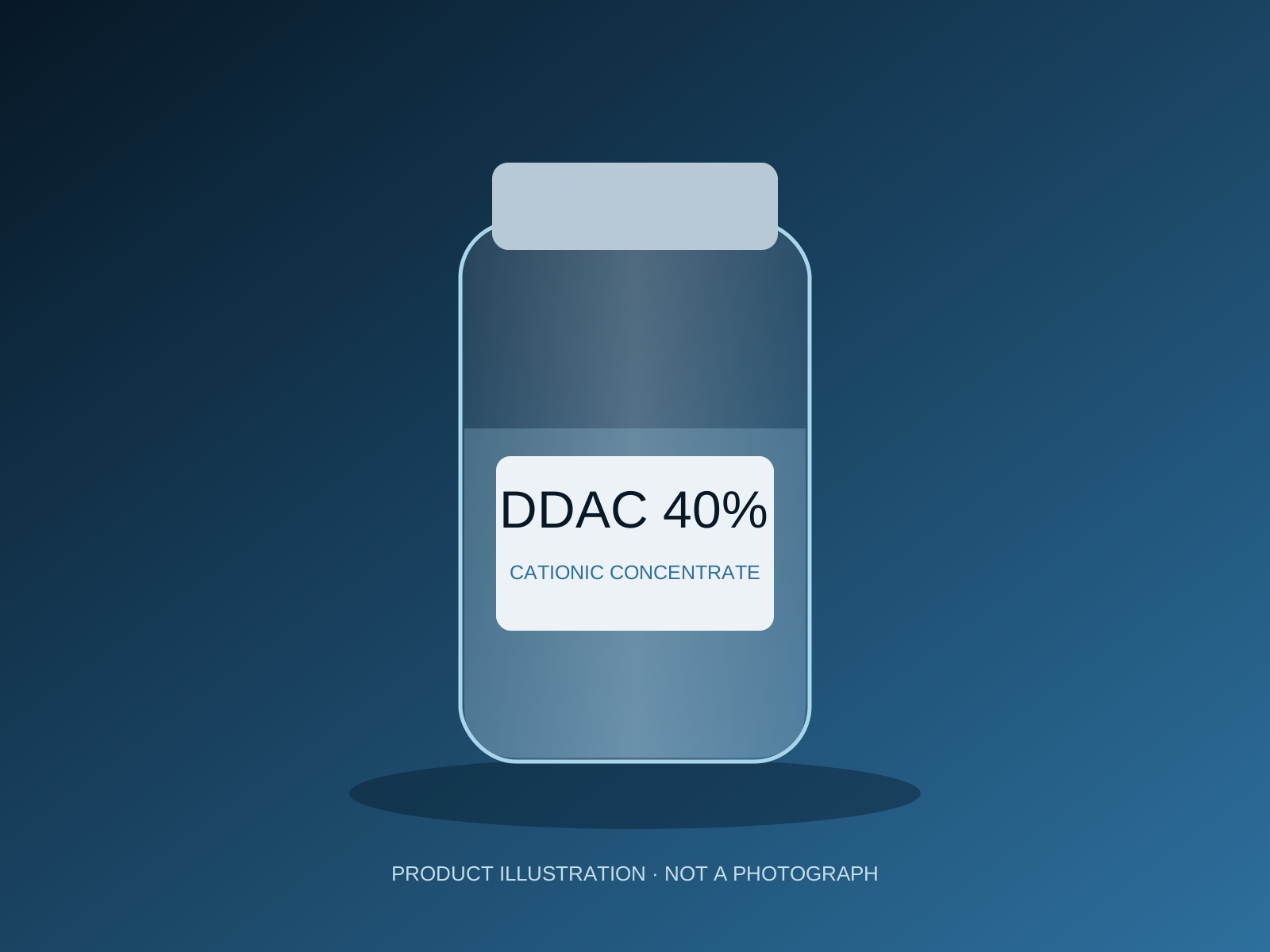
DDAC 40% is a cationic double-chain quaternary ammonium raw material for professional microbial-control formulation. It is offered alongside our core zinc-based odor neutralizers. DDAC biocidal activity and zinc ricinoleate odor binding are distinct functions; combining them requires product-specific compatibility and efficacy testing.
Purchasing information
Specifications and formulation guidance
| Chemical name / CAS | Didecyldimethylammonium chloride / 7173-51-5 |
|---|---|
| Active content (TDS specification) | 39.5–41.0% DDAC; nominal 40%. SDS composition range: 39.5–42%. Confirm the batch COA and agreed specification. |
| Appearance | Colorless to pale yellow clear liquid |
| pH | 6–9 (10% aqueous solution, 25°C); this is a test condition, not a finished-formula pH recommendation. |
| Solubility | Readily soluble in water, ethanol and acetone (TDS); slight foam when shaken in water. |
| Platinum-cobalt color | ≤50 (TDS) |
| Density / relative density | 0.92–1.02 g/cm³ (SDS) |
| Packaging | 25 kg, 50 kg, 200 kg and 1,000 kg plastic drums (TDS); confirm availability and net weight in the quotation. |
| MOQ | Confirm DDAC-specific order quantity with Alex. |
| Storage / shelf life | Cool, dry, well-ventilated storage, preferably below 30°C; sealed packaging. Two years as stated in the TDS. |
| Transport | Classification assessment pending. Non-dangerous-goods status is not certified; shipment requires assessment and carrier acceptance. |
Document basis: DDAC-40 TDS v1.0 (source technical version 20 February 2025) and SDS v1.0 (revision 30 October 2026). No DDAC batch COA supplied.
Concentrate strength and finished-product dose
DDAC active content measures the quaternary ammonium ingredient in the supplied concentrate. It differs from the amount of concentrate added to a formula and from the resulting finished-product active concentration. DDAC contains no zinc active; zinc-assay comparisons do not apply.
Suggested use and addition
The TDS lists 0.5–2.0% recommended addition. Confirm whether this is supplied-product or active basis before use. It is not a validated disinfection dose, contact time or efficacy claim. A 40% concentrate used at 1% by mass contributes a nominal 0.40% DDAC active; this is arithmetic only, not a use recommendation.
Compatibility checks before your trial
- Do not use with soap or anionic synthetic detergents. The SDS also identifies strong oxidizers, reducing agents and anionic surfactants as incompatible.
- The TDS lists additional incompatibilities including hydrogen peroxide, zinc sulfate and certain salts. Review the complete TDS before a combination trial; do not assume compatibility with zinc ricinoleate or the zinc amino acid complex.
- Avoid aluminum containers. Review packaging and finished-formula stability before scale-up.
- SDS: toxic if swallowed or in contact with skin; causes severe skin burns and eye damage; very toxic to aquatic life with long-lasting effects. Use professional handling controls and review the full SDS.
- No finished-product antimicrobial performance, consumer-use suitability or destination-market authorization is established by these supplier documents.
Form
Colorless to pale yellow clear liquid
The exact carrier, solvent and specification must be confirmed against the current product documents.
Best starting fit
Professional hard-surface and industrial water microbial-control development
Final suitability depends on the complete finished formula and evaluation conditions.
Applications
Where to begin evaluation.
Evaluation path
Move from document review to finished-formula testing.
- 01Review current TDS, SDS and batch COA
- 02Confirm target application, active basis and intended claim
- 03Test compatibility, stability and finished-product efficacy
- 04Confirm transport classification and carrier acceptance before shipment
Documents & samples
Request the current technical package for your market.
TDS, SDS, COA, use guidance and MOQ are supplied according to the selected product and inquiry.